Showing posts with label VIDEOS WITH THE MESSAGE. Show all posts

Tuesday, February 11, 2014

The story of Life cycle of Birth and Death. Why it happens?

The following story will help us understand how the living entity changes from one body to another based on his desires. Once there lived a person named Kailash who was very attached to his house. One day the great sage Narada came to him and said, "Kailash, come with me. I am going to Vaikuntha (the kingdom of God). I will take you along with me." Kailash replied, "Sorry sir, my children are very young. I have to take care of them. Maybe later."

Several years later Narada returned to him and asked, "Kailash, ready now?"

Kailash replied, "Sorry sir, now I have my grandson to take care. Also everyone at home needs my guidance. I cannot come now."

When Narada returned after many years, he came to know that Kailash had passed away. While leaving he noticed a dog barking loudly at the doorway. The dog said, "O Naradaji, I am Kailash here" Surprised Narada replied, "O Kailash, you have become a dog now! What are you doing here? Even now, it is not too late. I can take you to the kingdom of God. Would you like to accompany me?" The dog replied, "Sorry sir, my sons are very careless with the wealth I acquired. I have therefore become a dog to protect that wealth from thieves." Feeling very sorry for the attached Kailash, Narada went away. After many years when Narada returned, he learnt that the dog had died. Thinking sadly that Kailash must have gone to some unknown body, Narada departed. When he was walking behind the house in the paddy field, a snake came hissing on the way. The snake said, "Narada, I am Kailash here, I am Kailash here." Narada asked him, "What are you doing here in a snake's body, Kailash? Don't you want to come with me now? Even now it is not too late."

The snake replied, "Now I am happy that my sons have put all the money in a bank. But they are so lazy that they wake up very late in the morning. By that time, all the grains in this paddy field are either destroyed by elephants or stolen by neighbors. I have therefore become a snake to go round and round the field to protect the grains. I am very, very busy. I am sony, I cannot come with you now also."Seeing the pitiable condition of Kailash, Narada muni clapped his hands loudly, called the sons of Kailash and showed them the large snake living in their field. Immediately the sons of Kailash started hitting the snake with sticks. Kailash in his snake body tried to tell his sons, "I am your father and I am protecting your paddy fields for your sake. Why are you killing me?" But the more he hissed, the more his sons hit him till he finally died. While dying the snake remembered Narada and in his next life he became a great devotee of Lord Krishna by Narada's grace. Thus a person is impelled to accept one body after another according to his desires and actions. Such a person, being attached to his material plan-making business, spends all his time in bodily consciousness and goes on suffering in the cycle of birth and death.

A little girl experiences rain for the very first time


Tuesday, October 1, 2013

Is he rich or poor? You decide.

He has been described as "the world's 'poorest' president", as he donates around 90 percent of his $12,000 monthly salary to charities to benefit poor people.

Wednesday, September 11, 2013

I call him the real man of power, compassion and integrity.

This is Satoshi Komiyama, a caring Japanese man who entered the waters of Taiji Cove this week. He is pleading for the lives of wild dolphins who have been captured in underwater nets. Some will be sold to marine parks around the world, where they will live out their lives in captivity. Later, this idyllic Cove will become the site of one of the world’s most brutal slaughters — where thousands of dolphins will be mercilessly killed for their flesh.

Surrounded by police who were there to defend the notorious annual hunt, Satoshi did the only thing he could do — he held up his sign, and pleaded. But it was only after he submerged his head under water that he could hear it — families of panicked dolphins crying out in distress. After returning to the surface, Satoshi tried to describe what he heard, and he broke down.

please share this !!

Wednesday, January 30, 2013

Can the Politicians of our country take a leaf, from the life of this Crown Prince of Abu Dhabi?????????

H.H. General Sheikh Mohammed bin Zayed Al Nahyan (Crown Prince of Abu Dhabi, Deputy Supreme Commander of the UAE Armed Forces), was driving in Abu Dhabi, he saw a little girl beside the school looking in worry around as she was lost!

H.H.Sh.Mohammed parked his car and went down with his Assistant to the girl asking if she was lost and he offered the little girl a drive to her family house!


The little girl said that her father is supposed to be here and she didn’t accept his drive offer because her dad said to not trust strangers! 


The sheikh's assistant told the little girl that this gentleman is not a stranger, he is Sh. Mohammed!!

The girl answered: yes I know, but my dad said not to go with any strangers.

Sh. Mohammed smiled and he decided to wait next to the girl till her father show-up. The picture was captured by one of the school teachers.

Sunday, January 13, 2013

Among the hue & cry of the rape incident, are we forgetting something? An article from Chetan Bhagat to the Change Seekers.


Dear change seekers,

In recent weeks you have worked hard to make India a safer place. The recent Delhi gang rape dominated headlines and received world-wide attention, mainly due to your efforts. However, be mindful of certain worrisome negative aspects of this outrage. You may create a lot of noise, but not the desired change. It is important to understand India first.

India, no matter what your Civics teacher told you, is not an equal country. India is divided into four classes with different levels of power. For simplicity, let us call these classes the Ones, Twos, Threes and Fours (deliberately avoiding upper-lower classification).

The Ones are our political masters. They control India, primarily through control over land, resources and laws that govern us. They don’t directly own assets, but control the asset owners, the Twos.

The Twos are our industrialists and capitalists. They help secure and increase the power of the Ones. Business magazines honor them with terms like ‘the dynamic entrepreneurs of a new liberalized India’. While some may deserve such accolades, most don’t. The Ones allow the Twos to become rich through limited competition and tightly regulated approvals. Real estate, mining, infrastructure or most other sectors, no company in India can thrive without support of the political class.

The next class, the Threes, are people like you and me. We are people with a certain amount of affluence and education, comprising around ten per cent of India’s population. While life is a struggle for many Threes, they do have a basic standard of living. However, the Threes still do not get speedy justice, accountable leaders or a protective police force.

Notably, Threes have recently acquired a new media power. They are affluent and buy things advertisers want to sell. Hence, the media caters to Threes. The Threes dominate social media too. This power is real and substantial.

The Delhi gang rape victim was a Three, and the gruesome case made the rest of the Threes feel vulnerable like never before. They wanted the rape to be debated. Hence, for almost a month little else could be discussed in a country of 1.2 billion people. However, in the process, the Threes might have done some damage. For despite the well-intentioned outcry, they inadvertently showed that they care about themselves much more than another huge class, the Fours.


The Fours are the 90 per cent of the country, people with limited education, abysmal standards of living and little hope for a better future. They are our farmers, slum dwellers, domestic helpers and the hundreds of millions of Indians without proper healthcare, education and infrastructure. They get no debates on TV. People won’t protest for them on India Gate.

The Threes either shun them, or impose their new-found modern values on them. For example, Fours may see women-men relationships in a regressive way. The Threes, exposed to the latest Western beliefs, will mock them.

If you noticed the various debates and opinions on the case, the Threes only accepted ideas in line with their own liberal, modern value system. Nobody could dare say anything even slightly alternative or stress on the Indian reality without being ridiculed.

The Threes found a new power, but used it like the Ones and Twos — for selfserving purposes.

For will we ever passionately discuss the issues and lend our media power to issues that affect the Fours? Will we go to India Gate to help slum dwellers get proper drinking water, for instance?

As we alienate the Fours, we leave them open to be exploited by the Ones. The Ones echo the sentiments of the Fours and throw some scraps at them. In return, the Fours ignore the Ones’ misdeeds and bring them back to power. Meanwhile, we Threes keep screaming and watch our own self-created reality show.

This is no way to create a revolution, or even change. We have to take the Fours along. If we want people to change, we should not mock or deride. Instead listen and understand first and slowly nudge people towards change. Don’t just laugh at anyone who says women should cover up and not venture out at night. Suggest that while this old belief may come from a place of practical reality, this cannot be the primary solution. I am not saying these people are not regressive. However, if you want change, be inclusive.

India’s poor are a not separate species from us. If the politicians didn’t protect the Twos so much, we could open the economy further, truly liberalize and create a lot of opportunity.


Source Link :  http://blogs.timesofindia.indiatimes.com/The-underage-optimist/entry/open-letter-to-the-indian-change-seekers

Monday, December 31, 2012

When my two eyes of good and evil become single - Paramhansa Yogananda

I shall close my physical eyes and dismiss the temptation of matter. I shall peer through the darkness of silence until my eyes of relativity open into the one inner eye of light. When my two eyes of good and evil become single, and behold only the divine goodness of God in everything, then I shall find my body, mind, and soul filled with His omnipresent light.

Thursday, November 29, 2012

They were wrong. Never give up. Click the link to watch the video

https://www.facebook.com/fidarose.isha/posts/395876310494848?comment_id=2709839&ref=notif&notif_t=share_comment

Monday, September 17, 2012

Facebook - Like, Comment, Share.


 The "Like" option. The moment It brings a smile in my face, seeing anyone's post, it takes just a fraction of the second, to hit "Like". Enjoyed using it.

Next comes the "Comment" option. Usually I use it to express myself, a little more elaborately or maybe it is just a sense of enquiry or the best part of it is, to be communicative with each other. We feel more connected. Can evoke different kind of emotion, depending on how we are, within ourself.

And finally, the "Share" option. I would say that hitting "Like" and "Share" button has always happened simultaneously for me. Many times it would happen that I am not even aware, of whose article am I actually sharing. The content becomes significant, not the container. Almost 75% of the posts I "like", I "share" it with my friends. Sometimes, I wonder, if someday Facebook decides to remove the "Share" option, I will be the first person to quit Facebook. The moment I see that the post has given me something of immense value, how can I be miser in sharing it with the world. Without "sharing", I am denying the world, the bliss I have experienced. I want the whole world to benefit from it. It should reach every nook and corner of the world.

Saturday, August 18, 2012

Where the mind is without fear and the head is held high.


                                     This photo was taken in Hamburg in 1936, during the celebrations for the launch of a ship.  In the crowd, one person refuses to raise his arm to give the Nazi salute.  The man was August Landmesser.  He had already been in trouble with the authorities, having been sentenced to two years hard labour for marrying a jewish women.  We know little else about August Landmesser, except that he had two childrens.  By pure chance, one of his children recognized her father in this photo when it was published in German newspaper in 1991.  How proud she must have been in that moment.


Where the mind is without fear and the head is held high.
Where knowledge is free.
Where the world has not been broken up into fragments.
By narrow domestic walls.
Where words come out from the depth of truth.
Where tireless striving stretches its arms towards perfection.
Where the clear stream of reason has not lost its way.
Into the dreary desert sand of dead habit.
Where the mind is led forward by thee.
Into ever-widening thought and action.
Into that heaven of freedom, my Father, let my country awake. - Rabindranath Tagore

Wednesday, May 9, 2012

Bull Fight - A realization

"And suddenly, I looked at the bull. He had this innocence that all animals have in their eyes, and he looked at me with this pleading. It was like a cry for justice, deep down inside of me. I describe it as being like a prayer - because if one confesses, it is hoped, that one is forgiven. I felt like the worst shit on earth."

This photo shows the collapse of Torrero Alvaro Munera, as he realized in the middle of the his last fight... the injustice to the animal. From that day forward he became an opponent of bullfights.

Friday, April 20, 2012

How doctors choose to die


This article is written by  Ken Murray, MD, is a former clinical assistant professor of family medicine at USC, courtesy The Guardian on facebook. 

When faced with a terminal illness, medical professionals, who know the limits of modern medicine, often opt out of life-prolonging treatment. An American doctor explains why the best death can be the least medicated – and the art of dying peacefully, at home

Years ago, Charlie, a highly respected orthopaedist and a mentor of mine, found a lump in his stomach. He asked a surgeon to explore the area, and the diagnosis was pancreatic cancer. This surgeon was one of the best in the country. He had even invented a new procedure for this exact cancer that could triple a patient's five-year-survival odds – from five per cent to 15% – albeit with a poor quality of life. Charlie was uninterested. He went home the next day, closed his practice, and never set foot in a hospital again. He focused on spending time with his family and feeling as good as possible. Several months later, he died at home. He received no chemotherapy, radiation, or surgical treatment. Medicare didn't spend much on him.

It's not a frequent topic of discussion, but doctors die, too. And they don't die like the rest of us. What's unusual about them is not how much treatment they get compared to most Americans, but how little. For all the time they spend fending off the deaths of others, they tend to be fairly serene when faced with death themselves. They know exactly what is going to happen, they know the choices, and they generally have access to any sort of medical care they could want. But they go gently.

Of course, doctors don't want to die; they want to live. But they know enough about modern medicine to know its limits. And they know enough about death to know what all people fear most: dying in pain, and dying alone. They've talked about this with their families. They want to be sure, when the time comes, that no heroic measures will happen – that they will never experience, during their last moments on earth, someone breaking their ribs in an attempt to resuscitate them with CPR (that's what happens if CPR is done right).
Almost all medical professionals have seen what we call "futile care" being performed on people. That's when doctors bring the cutting edge of technology to bear on a grievously ill person near the end of life. The patient will be cut open, perforated with tubes, hooked up to machines, and assaulted with drugs. All of this occurs in the intensive care unit at a cost of tens of thousands of dollars a day. What it buys is misery we would not inflict on a terrorist. I cannot count the number of times fellow physicians have told me, in words that vary only slightly: "Promise me that if you find me like this you'll kill me." They mean it. Some medical personnel wear medallions stamped "NO CODE" to tell physicians not to perform CPR on them. I have even seen it as a tattoo.
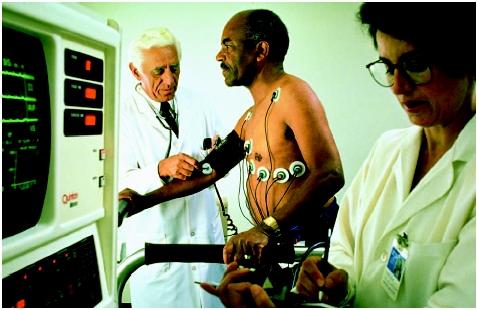
To administer medical care that makes people suffer is anguishing. Physicians are trained to gather information without revealing any of their own feelings, but in private, among fellow doctors, they'll vent. "How can anyone do that to their family members?" they'll ask. I suspect it's one reason physicians have higher rates of alcohol abuse and depression than professionals in most other fields. I know it's one reason I stopped participating in hospital care for the last 10 years of my practice.

How has it come to this – that doctors administer so much care that they wouldn't want for themselves? The simple, or not-so-simple, answer is this: patients, doctors, and the system.

To see how patients play a role, imagine a scenario in which someone has lost consciousness and been admitted to hospital. As is so often the case, no one has made a plan for this situation, and shocked and scared family members find themselves caught up in a maze of choices. They're overwhelmed. When doctors ask if they want "everything" done, they answer yes. Then the nightmare begins. Sometimes, a family really means "do everything," but often they just mean "do everything that's reasonable". For their part, doctors told to do "everything" will do it, whether it is reasonable or not.

That scenario is a common one. Feeding into the problem are unrealistic expectations of what doctors can accomplish. Many people think of CPR as a reliable lifesaver when, in fact, the results are usually poor. I've had hundreds of people brought to me after getting CPR. Exactly one, a healthy man who'd had no heart troubles (for those who want specifics, he had a "tension pneumothorax"), walked out of the hospital. If a patient suffers from severe illness, old age, or a terminal disease, the odds of a good outcome from CPR are infinitesimal, while the odds of suffering are overwhelming. But, of course, doctors play an enabling role here, too. The trouble is that even doctors who hate to administer futile care must find a way to address the wishes of patients and families. Imagine, once again, the A&E ward with those grieving, possibly hysterical, family members. They do not know the doctor. Establishing trust and confidence under such circumstances is a very delicate thing. People are prepared to think the doctor is acting out of base motives, trying to save time, or money, or effort, especially if the doctor is advising against further treatment.

Some doctors are stronger communicators than others, and some doctors are more adamant, but the pressures they all face are similar. When I faced circumstances involving end-of-life choices, I adopted the approach of laying out only the options that I thought were reasonable (as I would in any situation) as early in the process as possible. When patients or families brought up unreasonable choices, I would discuss the issue in layman's terms that portrayed the downsides clearly. If patients or families still insisted on treatments I considered pointless or harmful, I would offer to transfer their care to another doctor or hospital.

Should I have been more forceful at times? I know that some of those transfers still haunt me. One of the patients of whom I was most fond was a lawyer from a famous political family. She had severe diabetes and terrible circulation, and, at one point, she developed a painful sore on her foot. Knowing the hazards of hospitals, I did everything I could to keep her from resorting to surgery. Still, she sought out outside experts with whom I had no relationship. Not knowing as much about her as I did, they decided to perform bypass surgery on her chronically clogged blood vessels in both legs. This didn't restore her circulation, and the surgical wounds wouldn't heal. Her feet became gangrenous, and she endured bilateral leg amputations. Two weeks later, in the famous medical centre in which all this had occurred, she died.

It's easy to find fault with both doctors and patients in such stories, but in many ways all the parties are victims of a larger system that encourages excessive treatment. Many doctors are fearful of litigation and do whatever they're asked to avoid getting in trouble. Even when the right preparations have been made, the system can still swallow people up. One of my patients was a man named Jack, a 78-year-old who had been ill for years and undergone about 15 major surgical procedures. He explained to me that he never, under any circumstances, wanted to be placed on life support machines again. One Saturday, however, Jack suffered a massive stroke and was admitted to A&E unconscious, without his wife. Doctors did everything possible to resuscitate him and put him on life support. This was Jack's worst nightmare. When I arrived at the hospital and took over Jack's care, I spoke to his wife and to hospital staff, bringing in my office notes with his care preferences. Then I turned off the life support machines and sat with him. He died two hours later.

Even with all his wishes documented, Jack hadn't died as he'd hoped. The system had intervened. One of the nurses, I later found out, even reported my unplugging of Jack to the authorities as a possible homicide. Nothing came of it, of course; Jack's wishes had been spelled out explicitly, and he'd left the paperwork to prove it. But the prospect of a police investigation is terrifying for any physician. I could far more easily have left Jack on life support against his stated wishes, prolonging his life, and his suffering, a few more weeks. I would even have made a little more money, and Medicare would have ended up with an additional $500,000 (£314,500) bill. It's no wonder many doctors err on the side of over-treatment.

But doctors still don't over-treat themselves. Almost anyone can find a way to die in peace at home, and pain can be managed better than ever. Hospice care, which focuses on providing terminally ill patients with comfort and dignity rather than on futile cures, provides most people with much better final days. Amazingly, studies have found that people placed in hospice care often live longer than people with the same disease who are seeking active cures.

Several years ago, my older cousin Torch (born at home by the light of a flashlight) had a seizure that turned out to be the result of lung cancer that had gone to his brain. I arranged for him to see various specialists, and we learned that with aggressive treatment of his condition, including three to five hospital visits a week for chemotherapy, he would live perhaps four months. Ultimately, Torch decided against any treatment and simply took pills for brain swelling. He moved in with me.

We spent the next eight months having fun together like we hadn't had in decades. We went to Disneyland, his first time. We'd hang out at home. Torch was a sport nut, and he was very happy to watch sport and eat my cooking. He even gained a bit of weight, eating his favourite foods rather than hospital food. He had no serious pain, and he remained high-spirited. One day, he didn't wake up. He spent the next three days in a coma-like sleep and then died. The cost of his medical care for those eight months, for the one drug he was taking, was about $20.

Torch was no doctor, but he knew he wanted a life of quality, not just quantity. Don't most of us? If there is a state-of-the-art of end-of-life care, it is this: death with dignity. As for me, my physician has my choices. There will be no heroics, and I will go gentle into that good night.
• Ken Murray, MD, is a former clinical assistant professor of family medicine at USC. Taken from an article originally published at Zócalo Public Square.
 
design by Grumpy Cow Graphics | Distributed by Deluxe Templates | Blogger Styles